Rise in Pollution Levels Over the Years
India ranks among the top ten most polluted countries worldwide, a consequence of rapid urbanization and industrialization. This growing trend toward industrial expansion, while bolstering economic output, has also introduced significant environmental challenges, particularly in the form of air pollution.
Emissions from factories, power plants, vehicles, and other sources have compounded environmental degradation, contributing to poor air quality across the nation. Additionally, environmental regulations have struggled to keep pace with industrial growth, leading to inadequate control over pollution levels.
The Pollution-Causing Nature of the Ceramic Industry
Due to the nature of the industry, it comes as no surprise that the manufacture of ceramic insulators creates pollution that contributes to environmental degradation — especially through fuel consumption. Air pollution is the most hazardous, with many ceramic manufacturing facilities reported to have poor, unhygienic conditions both inside and outside the plants.
Air pollution arising from ceramic production takes the form of suspended dust particles, aerosol particles, smoke and unburnt fossil fuel particles, paint and glaze spray particles, and hot air. In many units, dusty working environments and unbearable thermal conditions have been found in kiln departments — and in colour, dye and paint sections, hazardous chemical spray particles in the air affect workers' health.
Pollution's Effect on Transmission Infrastructure
Transmission lines are often constructed through areas with varying degrees of environmental stressors, from urban industrial zones to rural agricultural regions. Insulators — crucial components that keep transmission lines from grounding — are highly susceptible to pollutants deposited from the air.
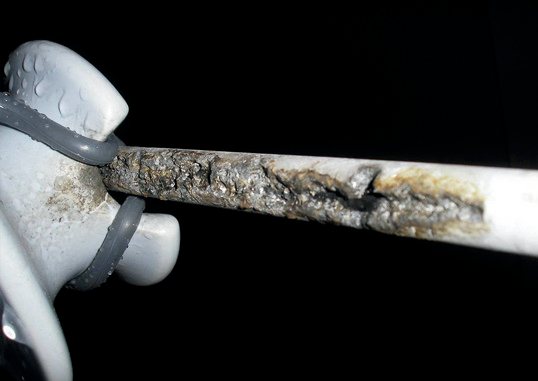
Over time, accumulated contaminants can degrade the insulators' material properties, increasing their likelihood of failure. This degradation results in transient faults, intermittent outages, and, in severe cases, permanent line failures that can disrupt power supply and impact economic growth.
In response, engineers have increasingly turned to solutions that reduce pollution-induced faults. One major innovation has been the shift from traditional porcelain insulators to polymer-based alternatives — gaining favour for their durability and resistance to pollution, as part of a broader movement to build infrastructure resilient to India's environmental conditions.
Cause & Effect: The Shift to Polymer Insulators
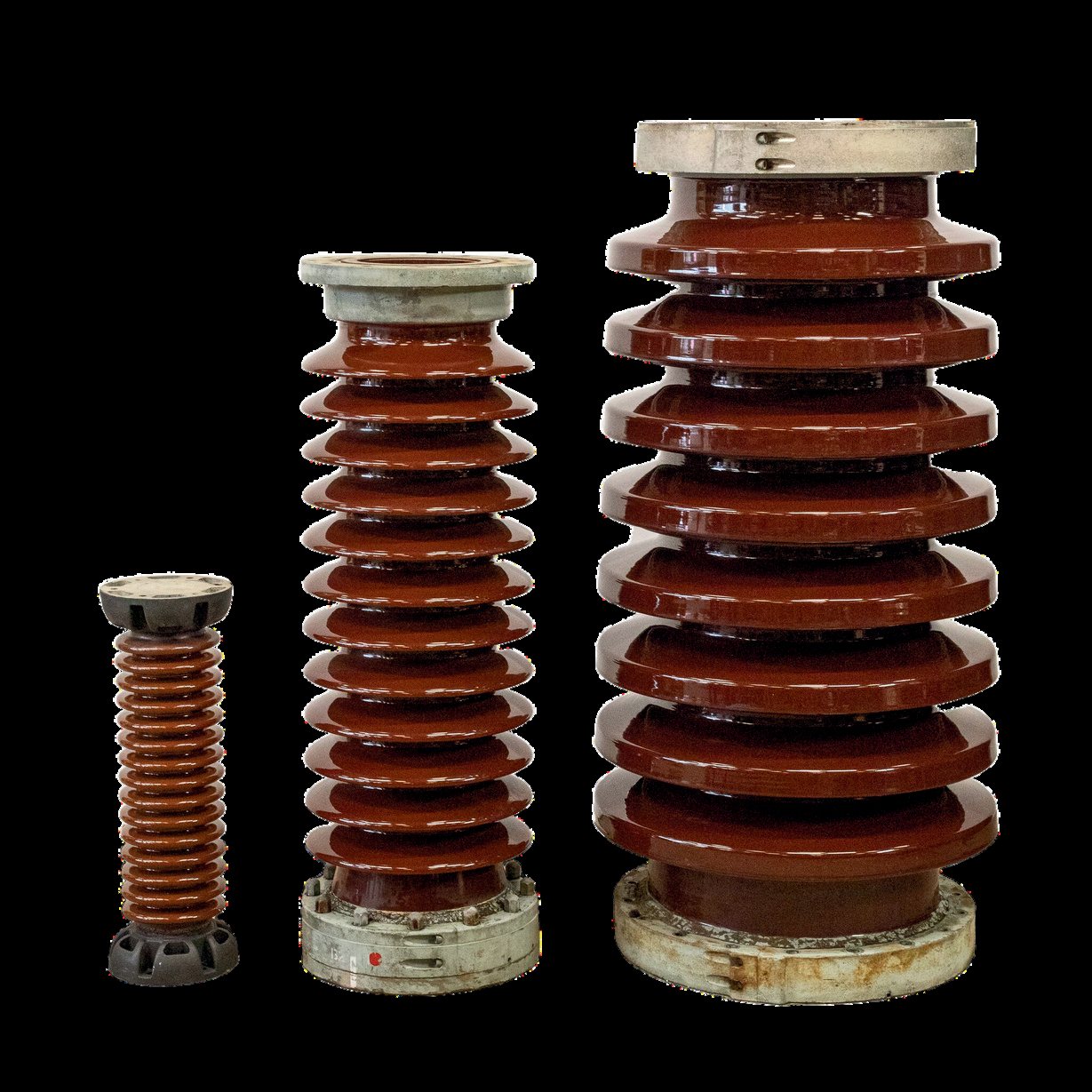
The compactness of composite insulators is visible at a glance — and for handlers, the fact that composite insulators are roughly 15% the weight of porcelain ones makes them easier to ship and handle, and far more cost-effective across the supply chain. A typical 400 kV porcelain string weighs approximately 135 kg and requires specialized equipment and more labour; a comparable polymer string weighs around 20 kg — a huge benefit in freight, saving on shipping costs and cutting transport-related emissions.
Porcelain vs Composite: The Full Comparison
| Aspect | Porcelain insulators | Polymer / composite insulators |
|---|---|---|
| Weight (400 kV string) | ≈ 135 kg — specialized handling required | ≈ 20 kg — simple transport and installation |
| Fragility | Highly fragile; susceptible to shock and vibration damage | Withstands shock without significant damage |
| Packing & transport | Expensive and risky | Safer, more economical |
| Installation | Labour-intensive and risky due to weight and fragility | Simpler, safer, more economical |
| Handling | Requires extreme care | Fewer precautions; quicker positioning |
| Breakage in transit | An estimated 10–15% breakage rate during transport, storage and installation | Resistant to breakage; may pick up cuts/scratches if mishandled |
| Maintenance cost | Moderate over lifecycle; regular cleaning, washing, greasing | Lower; virtually maintenance-free |
| Vandalism resistance | Vulnerable to stone pelting or gunshots | Highly resistant to external damage |
| Mechanical failure | Reduced lifespan from pin erosion and mechanical separation | Single-piece design minimizes such issues |
| Flashover & puncture | Limited resistance; sustains 2–3 flashovers before replacement | High flashover resistance (replace immediately after a flashover) |
| Tracking & erosion | Low resistance; erodes over time | Excellent tracking and erosion resistance |
| Dielectric strength | Diminishes with age | Maintains excellent insulation performance over time |
| Contamination resistance | Heavily affected by pollution; higher maintenance | Less affected — advantageous in polluted areas |
| Hydrophobicity | None — water films form, raising flashover risk | Inherently hydrophobic; water beads up, minimizing flashover risk |
| Self-cleaning | Attracts dirt, sand, salt and snow; washed only by rainfall | Self-cleaning via hydrophobic surface |
| Tensile strength | Good | Superior, thanks to advanced crimping technology |
| Performance in snow | Generally better | Comparatively poorer; may crack in extreme cold over time |
| Manufacturing | Lengthy process with health and environmental risks | Shorter, safer, pollution-free process |
Way Forward
The incorporation of advanced materials with superior hydrophobic properties, enhanced by nanotechnology, holds the potential to create a new generation of composite insulators tailored for specific climatic and pollution conditions.
Although silicone rubber remains the preferred material in composite insulators, further research in silicone formulations is essential to address challenges such as surface silicification, deep surface cracking, and mould growth. Sophisticated software tools enable customized insulator designs that align closely with specific mechanical and electrical requirements — while enhanced predictive models, coupled with offline and online monitoring, will let operators accurately assess insulator condition across their networks and reduce maintenance costs.
Organizations like PGCIL, IEC and CIGRE, along with other standard-setting bodies, are encouraged to broaden existing test criteria to ensure insulator quality under diverse operating conditions. Advanced diagnostic techniques will also facilitate an increase in live-line maintenance, minimizing the need for shutdowns.
While transmission operators globally continue to employ ceramic, glass, and composite insulators, the share of composite insulators has notably increased in recent years. With renewables set to play an expanding role in the global energy landscape, power systems must become increasingly robust and intelligent — driving demand for ongoing R&D in insulator materials, testing protocols, diagnostics, and design.