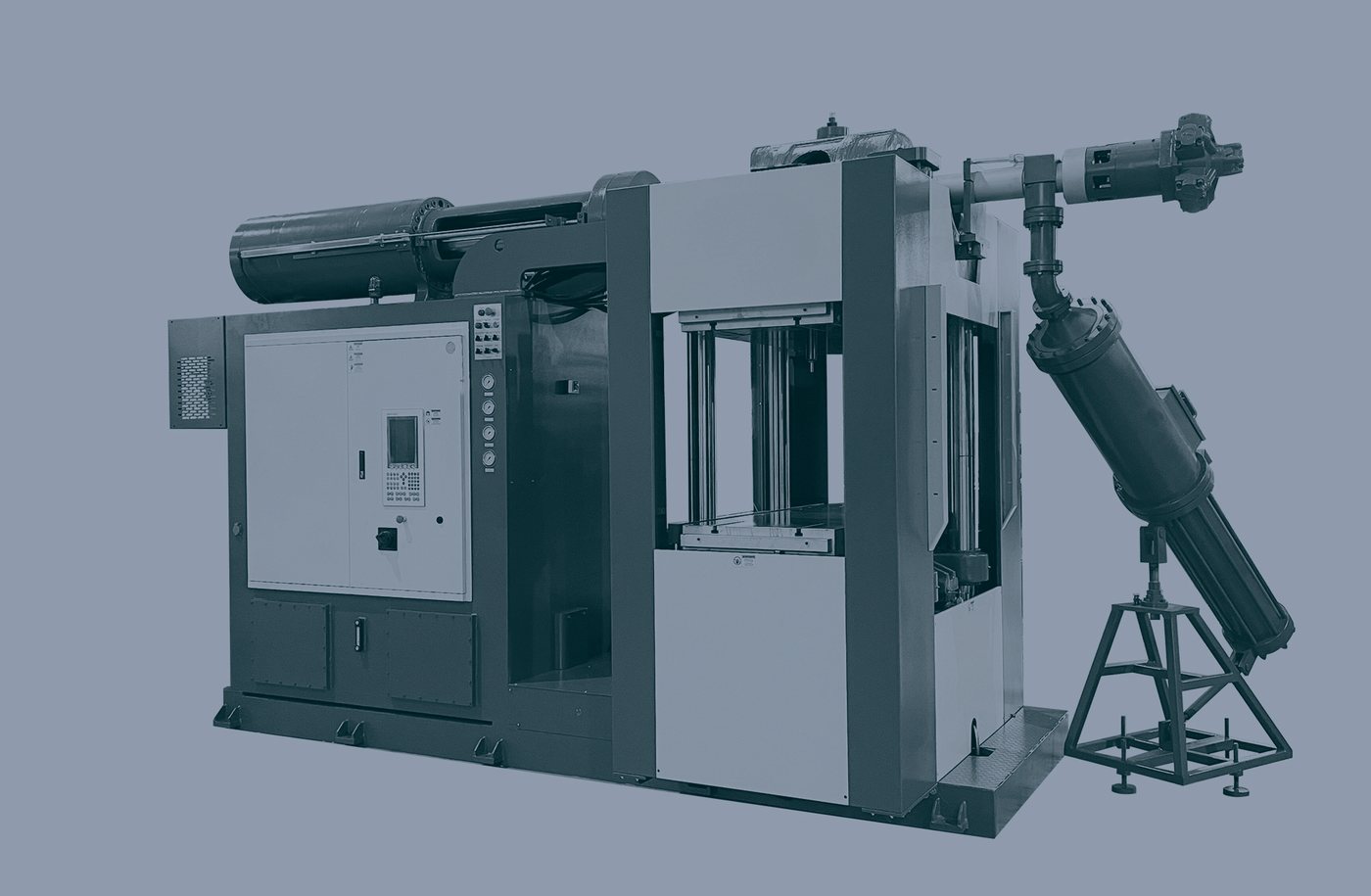
Foundational Pillars of Preventive Maintenance
A strong maintenance routine begins with mastering the basics. These essential tasks, when performed daily with care and consistency, form the backbone of reliable equipment performance and plant uptime.
Why Maintenance Matters
Composite insulators demand precision: exact dimensions, strong bonding between core and housing, and flawless surface finish for long-term performance in high-voltage environments. The injection moulding system must operate within tight process windows. Neglecting maintenance can lead to:
- Increased scrap and rejection rates
- Poor bonding between silicone rubber and FRP rods
- Surface defects due to contaminated or damaged moulds
- Overheating or underheating due to cooling system failure
- Unexpected downtime leading to delayed deliveries
In industries like power transmission, where insulator failure can have widespread consequences, maintenance is not just a cost-saving measure — it is a quality and safety imperative. The core areas: mould care and polishing; cooling systems and towers; hydraulic and injection systems; heating and temperature control; and electrical and safety systems.
Temperature Control Systems in Injection Moulding
In the injection moulding of silicone-housed composite insulators, thermal management plays a pivotal role in product quality, cycle time, and equipment longevity — yet cooling systems and towers are often the most neglected part of the operation until problems arise, leading to improper curing, warping, prolonged cycle times, and even mould damage.
Silicone rubber requires a tightly controlled thermal cycle — the thermal system isn't just for reducing temperature, it's about managing it precisely and consistently:
| Zone | Temperature window | Purpose |
|---|---|---|
| Mould | 140–175 °C | Kept hot to initiate proper curing of the rubber |
| Screw | 30–45 °C | Temperature-controlled to prevent premature curing |
| Barrels | 40–55 °C | Maintain flow without scorching the compound |
| Cold Runner Block (CRB) | 60–75 °C | Preserve material integrity up to the cavity gate |
Core Components of the Thermal System
Cooling Maintenance Schedule
| Frequency | Tasks |
|---|---|
| Daily / weekly | Check coolant level, pressure and temperature · inspect tower for scaling, algae, overflow · ensure pumps run smoothly without cavitation · check water hardness (<100 ppm) |
| Monthly | Clean strainers and filters in chiller units · descale open-loop circuits chemically where necessary · verify flow across all CRB circuits with a flow meter or IR thermometer to spot dead zones |
| Quarterly | Test water quality (pH, hardness, microbial content) — poor water quality is the most common cause of cooling failure · inspect and clean tower fill media · flush lines with descaling agents or ultrasonic cleaning |
| Yearly | Thermal audit of all cooling circuits · replace ageing rubber hoses and corroded pipelines · service chiller compressors, recalibrate temperature sensors and PID controllers |
Upgrading your cooling infrastructure: if scaling up or facing persistent issues, consider closed-loop cooling systems (prevent contamination and scale), variable-speed pumps and fans (dynamic performance, energy savings), flow and temperature sensors with PLC integration (real-time monitoring and alarms), and descaling systems or auto-backflush filters — especially in hard-water regions.
Cooling is not optional — it's foundational. A well-maintained cooling system keeps cycle times consistent, ensures surface finish and dimensional accuracy, maintains long-term mould health, and secures consistent bonding and cure rates. Neglecting it silently erodes productivity and product quality.
Mould Care and Polishing
The mould is the most valuable tool in the injection moulding process — it defines shape, surface finish, and dimensional accuracy. With silicone rubber, especially HCR, mould care is non-negotiable: even the best machine cannot compensate for a dirty, scratched, or poorly maintained mould.
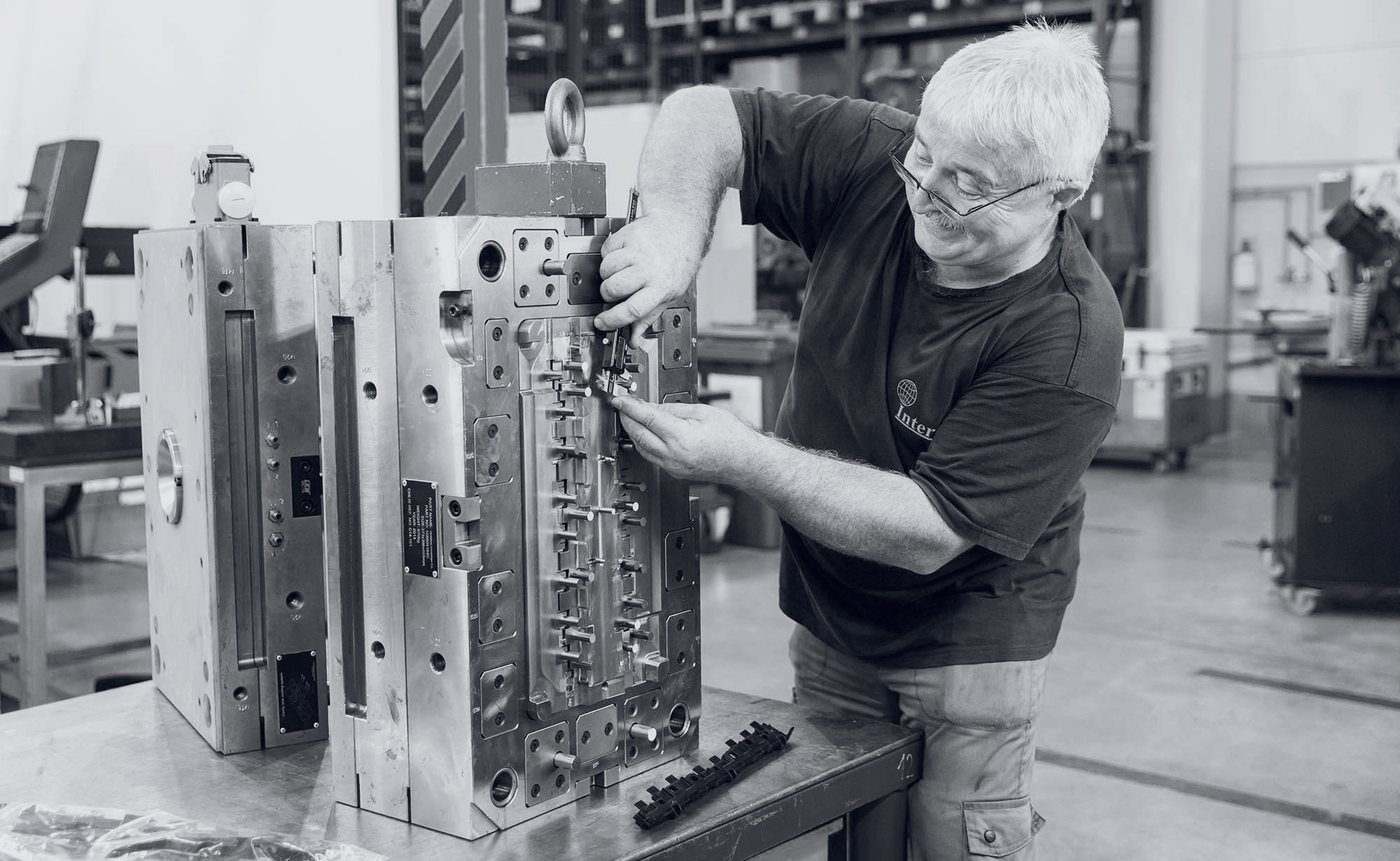
Mould Maintenance Schedule
| Task | Frequency |
|---|---|
| Visual inspection & light cleaning | Every shift |
| Vent & pin inspection | Weekly |
| Polishing (light) | Monthly, or after a major batch |
| Thermal inspection (IR scan) | Quarterly |
| Channel descaling | Quarterly, or based on water quality |
| Full refurbishment (CMM check, full polish) | Annually, or after 50,000+ cycles |
Thermal considerations: temperature uniformity is key for complete curing and bonding. Scale builds up inside mould channels over time, causing hot or cold spots — descale internal channels with mould-safe agents, use infrared thermography to detect thermal zones, and replace corroded fittings and O-rings. Storage: clean and dry the mould thoroughly, apply rust preventive oil to all steel surfaces, store in a clean, dry, temperature-controlled environment, and log maintenance history for each tool.
The mould is your product. It defines quality, reliability, and brand reputation. Investing in mould maintenance is not an overhead — it is insurance for your productivity and your customer's trust.
Hydraulic and Injection Systems
The hydraulic and injection systems form the muscle and brain of the process. Where dimensional accuracy, complete cavity fill, and flawless bonding are non-negotiable, any degradation introduces severe issues — short shots, flashing, unpredictable cycle times, premature wear. Composite insulators' long, complex shapes demand high injection pressures and accurate speed control; silicone rubber's shear and temperature sensitivity means poor hydraulic performance causes overheating, under-curing, or premature vulcanization — and a leaky cylinder can stop a machine mid-cycle, wasting expensive rubber.
Key Components and What to Maintain
Preventive Maintenance Schedule
| Task | Frequency |
|---|---|
| Oil level & temperature check | Daily |
| Check for visible leaks | Daily |
| Clean filters & inspect valves | Weekly |
| Oil sampling & contamination check | Monthly |
| Pressure gauge calibration | Quarterly |
| Full hydraulic system audit | Yearly |
Advanced monitoring: for high-value continuous operations, integrate real-time pressure and flow sensors, vibration monitoring on pumps and motors, oil condition sensors, and cycle-consistency logging to catch slow performance drifts.
Signs It's Time for Immediate Action
| Symptom | Action |
|---|---|
| Oil smells burnt or looks dark/cloudy | Change immediately |
| Slow response in injection or ejection | Check valves and pump |
| Random part defects with unchanged parameters | Check cushion and injection repeatability |
| Hydraulic unit getting noisier or hotter | Possible pump failure or clogged cooling system |
Pressure is precision. The hydraulic and injection systems define how precisely, consistently, and safely you mould each unit. Maintenance is not a back-end function — it's part of your production quality strategy.